
California Officials Ready to Spank Oil Companies
December 17, 2014
A report released by Consumer Watchdog at the summit showed that the companies had spent more than $100 million on lobbying and campaign contributions during the last five years in California to combat environmental protections.
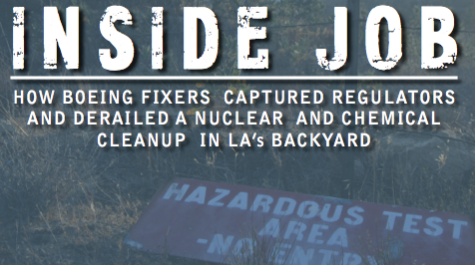
Inside Job – How Boeing Fixers Captured Regulators And Derailed A Nuclear And Chemical Cleanup In LA’s Backyard
A new report released by Consumer Watchdog today documents how Boeing and its influential fixers derailed the cleanup of a partial nuclear meltdown site in greater Los Angeles with help from their regulators at the Department of Toxic Substances Control (DTSC).
Click here to read and download a copy of the report.
Golden Wasteland Project
Golden Wasteland is a six-month long study by Consumer Watchdog of The Department of Toxic Substances Control (DTSC) and the job it’s doing to protect Californians and the environment from toxic harm. Based on interviews with DTSC staff, present and former, as well as environmental lawyers, prosecutors, advocates, consultants, and affected communities, it is clear that the DTSC is falling down on the job.
Click here to read and download a copy of the report.
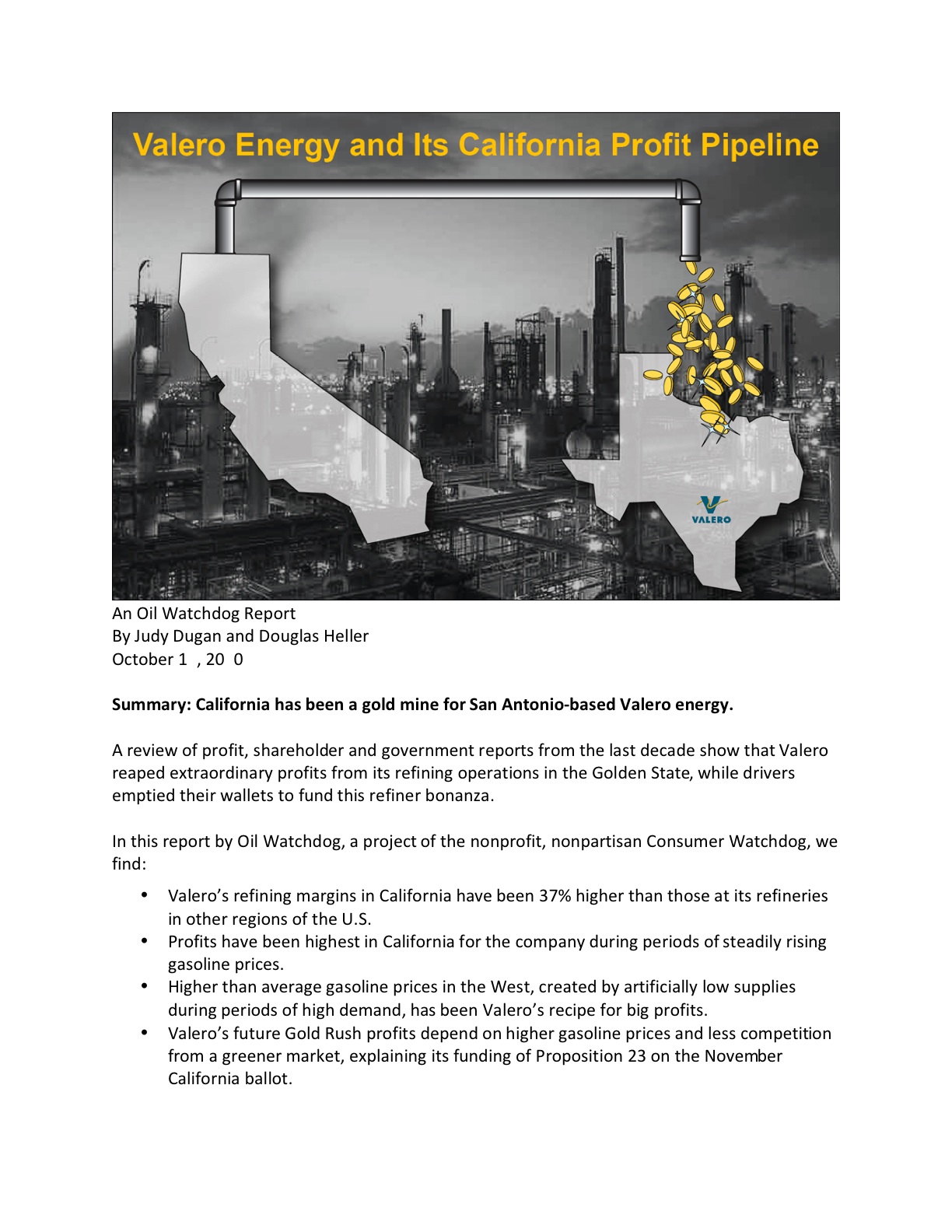
Valero Energy and Its California Profit Pipeline
October 12, 2010
California has been a gold mine for San Antonio‐based Valero energy, the top supporter of Proposition 23. A review of profit, shareholder and government reports from the last decade show that Valero reaped extraordinary profits from its refining operations in the Golden State, while drivers emptied their wallets to fund this refiner bonanza.
The Road to Cleaner & Cheaper
A Handbook of Transportation and Related Energy Choices
May 19, 2009
This handbook offers solutions for the most visible and pervasive sector of the current oil/environmental crisis: transportation by automobile. Americans travel more than 3.5 trillion vehicle miles per year1 (not even including occasional long-distance drives). They face often-staggering gasoline costs and emit millions of tons of pollutants. Our assessments and recommendations aim at reducing the use of oil as a personal transportation fuel while offering consumers alternatives that are ultimately both cleaner and cheaper.
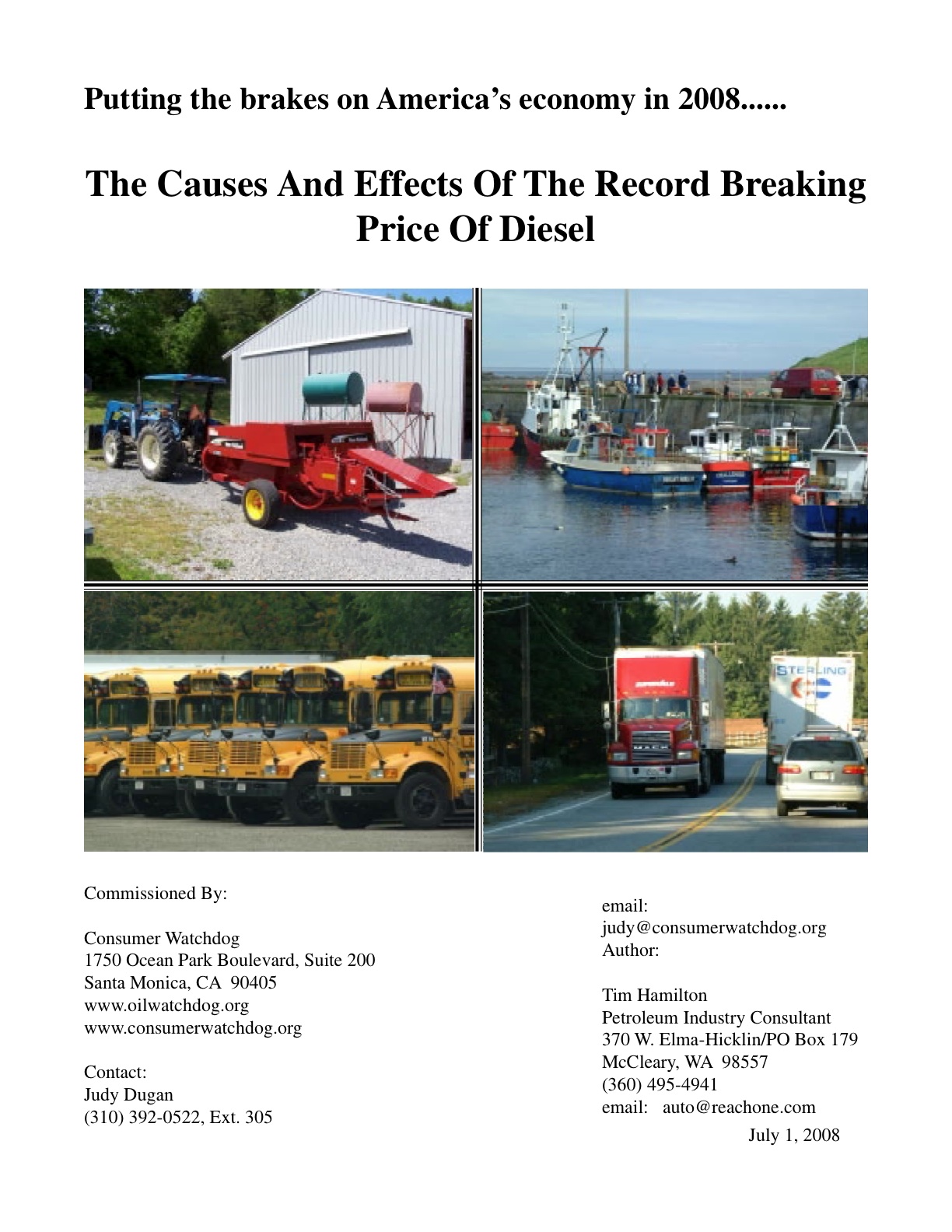
The Causes And Effects Of The Record Breaking Price Of Diesel
Putting the brakes on America’s economy in 2008…
July 1, 2008
Diesel fuel is the engine of American commerce and public life. Oil companies, by manipulating supply, put sugar in the tank of a whole economy this spring. The companies and their refiners produced less diesel, imported less diesel and exported far more diesel than in previous years. This shortage was abetted by a careless and deliberate lack of oversight by government. The story is laid out step by step in this study.
The “Katrina Syndrome”
Low Supplies = High Profits in 2007
July 23, 2007
This report investigates why the price of gasoline at the pump in the U.S. and California do not follow downward changes in the price of crude oil. It findings document how oil companies and their refineries fail to raise gasoline inventories during the off-season. Longer than usual maintenance shutdowns, mechanical failures, fires other incidents also spike gasoline prices and compound effects of the lack of inventory. These events disconnect the price of gasoline from the price of crude oil.
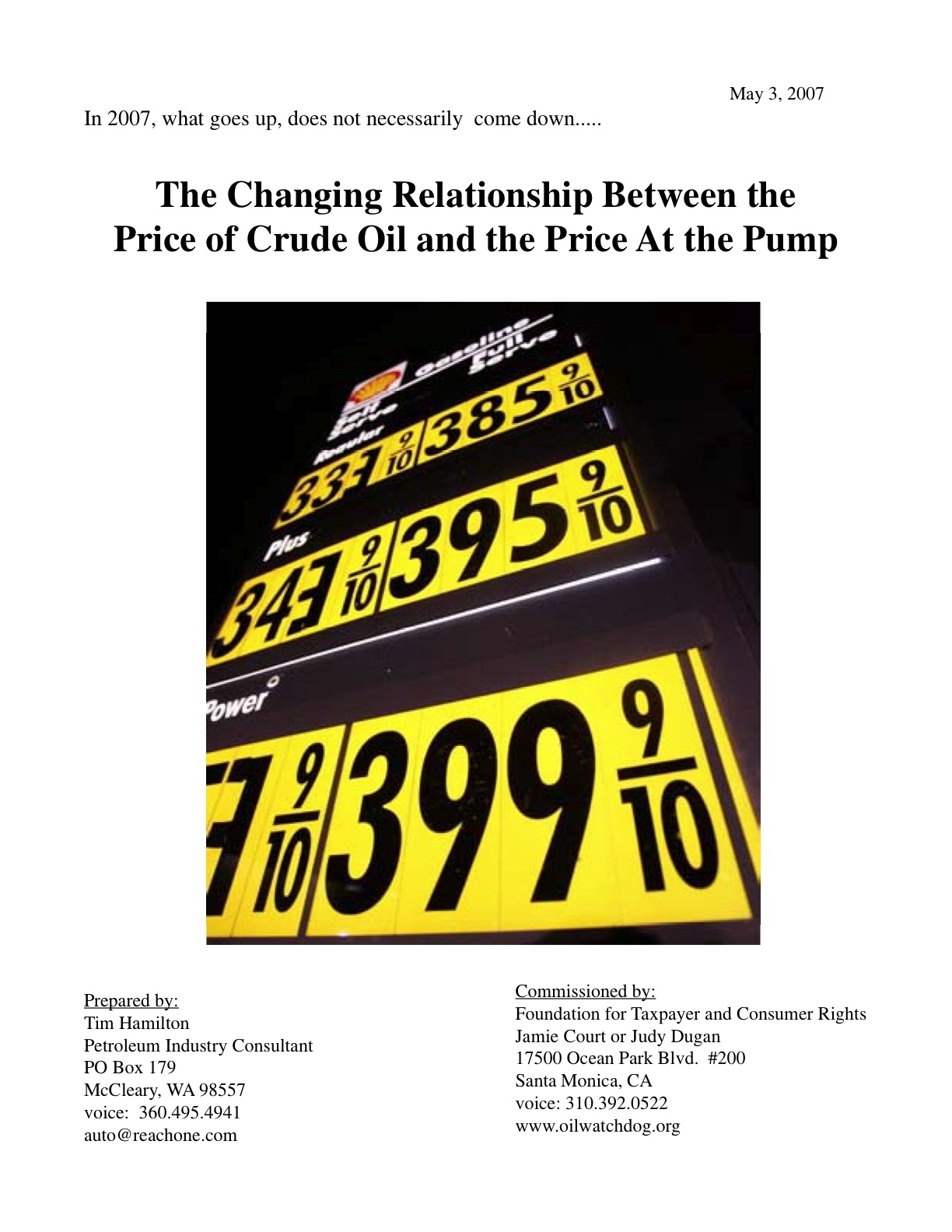
The Changing Relationship Between the Price of Crude Oil and the Price At the Pump
In 2007, what goes up does not necessarily come down…
May 3, 2007
Consumer Watchdog asked independent oil analyst Tim Hamilton to examine gasoline price increases nationally and in California, in comparison to the price of crude oil. Hamilton compared the average price of gasoline with the spot price of the benchmark West Texas Intermediate (WTI) crude oil in the U.S. and California, from early April 2006 until April 23, 2007. The primary data source was the federal Energy Information Administration. Hamilton’s conclusion is that the traditional link between the spot price of crude oil, which historically equaled about 55 percent of the price of gasoline, is broken. The result of the broken price link is a marked and sustained increase in profits from the refining of
oil into gasoline.