
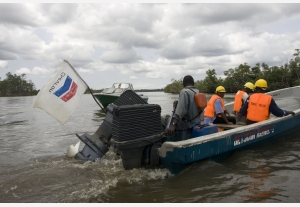
11-26-08 by dugan
A jury in San Francisco is deliberating whether Chevron is liable
for a shooting spree by Chevron-paid Nigerian troops against
protesters aboard an oil platform a decade ago. No matter
what the decision, this case and others of oil companies
behaving as their own governments threaten not just on corporate
treasuries, but U.S. moral capital in the world.
 Chevron
blames the world’s thirst for oil for its willingness to gamble with
unstable dictators, but its gambles, including a new oilfield in an extremist-plagued area of Indonesia, only underline the urgency of cutting U.S.
dependence on oil. With a new
administration trying to reassert America’s global citizenship and seek
the cooperation of other nations, Chevron is a dragging anchor. (In photo at left, Chevron flies its own flag in Nigeria.)
The
Nigeria case could go either way, in part because Chevron has poured
unlimited funds into fighting the suit by injured Nigerian protesters.
It’s amazing that the lawsuit was even heard in a U.S. courtroom, given
the unequal resources. And it’s a sure thing that if Chevron loses in
San Francisco, it will keep fighting and delaying in higher courts. The
costly tactic paid off for Exxon in the Exxon Valdez case, and Chevron
is using the same strategy against a much larger toxic pollution case
in Ecuador.
One cloud over the Nigeria case is that since
Chevron called in the Nigerian federal troops who operated virtually as
Chevron employees, protests in Nigeria’s oil region have descended from
demands for the jobs that Chevron had promised into gang-like thievery
and violence. Nigeria’s government reeks of corruption and abuses fueled by its oil revenue. It’s not clear whether the jury will parse conditions
then from conditions now. In any case, Chevron has kept operating in
Nigeria.
But there’s no doubt that Chevron controlled the trigger-happy troops who opened fire, killing one protester and injuring others:
Plaintiffs’ lawyer Dan Stormer argued that protesters had been planning
to leave peacefully and that Chevron was negligent in calling in the
security forces, who included allegedly notoriously brutal mobile
police known as "kill and go."Stormer maintained the company
was responsible for the injuries and death because it paid for the
salaries, housing and helicopter transportation of the security forces.
Chevron executives alleged at the time that they knew nothing about the arrangement, which is at the heart of the human rights lawsuit. It later emerged that Chevron headquarters had fully approved the troop payments and support.