
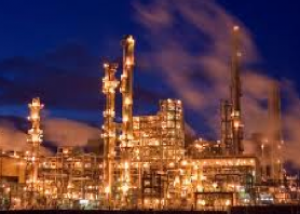
1-21-09 by dugan
It’s not exactly a buzz yet, but there’s discussion in Washington
about banks becoming more like regulated public utilities. Let’s add to
that the refining business, which has more in common with  electricity
producers than banks do. Tougher regulation of refiners is something
OilWatchdog has advocated for a few years–and these days regulation gets respect, not a Cheney-esque brushoff.
Refining, if it were regulated like a utility, would still make a
steady profit–in fact, the business would never suffer a loss and
would be required to plan and price for upgrades and modernization. But
refiners’ incentive to game the system would disappear. And in
combination with regulation of oil futures trading, the roller coaster
of oil and fuel prices would start to flatten out, with much more
lopped off from the peaks than from the valleys.
This post at the TPM news website wraps up the banks-as-utilities theme:
What are banks likely to look like in a few years? After all, Wall
Street as we once knew it is now gone with all the investment houses
having either disappeared or turned
themselves into bank holding companies. The idea of nationalization has
been out there but that, I think, is a loaded word and not quite
right…. It’s
also a misnomer since no one really thinks Citigroup or Wachovia are
about to become wholle federally owned and run. The better metaphor may
be the idea that banks will become utilities, like ConEd in New York or Duke energy
in the south and midwest. Electricity in the United States is mostly
provided by private utility companies that are heavily regulated even
more than banks. For instance, they usually need regulators to sign off
on rate increases while no bank has to check in with the FDIC before
raising fees for say, an overdrawn check. Still, utilities are not
nationalized in any sense.
The point about banks is that we want them to be a lot more boring
and safe, yet still fully able to take in our money and lend it out to
others. We’d also be better off as a nation if the refinery end of the
oil business were regulated, yet always made enough money to invest in
upkeep and modernization.
Refineries are also similar to utilities in producing an economically critical product.
The refining business is already plenty boring–crude oil goes in,
fuel and a few other products including asphalt come out. The cost of
doing business is stable except for the price of oil. But as refineries
operate now, they can manipulate supply to spike the pump price of
gasoline and diesel.
The few major refiners operating in most regions are perfectly able
to see the common profit in cutting back production to reduce supply
and raise prices. California’s gasoline stocks are down nearly 30% from last year, more than three times the state’s single-digit drops in consumption.
Such supply cutbacks are the reason that gasoline in California is
$2.08 on average, while the latest spot cost of crude oil in California
is 76 cents a gallon by the estimate of the California Energy
Commission. The actual price paid may be far less. So who’s keeping the
difference? It’s the refiners.
It’s yo-yo pricing that’s crazy, not regulation.