
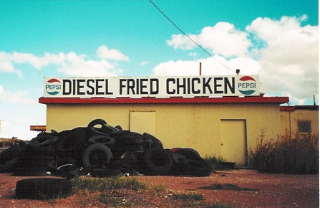
When a major oil company announces a green fuels project, the trumpet is loud. Press releases, media blitz, public officials on site. The death of the project is a slink-away-at-midnight affair. So it is with ConocoPhillips’ deal with Tyson Foods in Arkansas to make biodiesel from waste animal fat—tons of it. Conoco CEO Jim Mulva tucked this bit of doublespeak into a softball Arkansas interview Wednesday on national energy policy and Arkansas’ business environment:
The [biodiesel] project, which transforms Tyson’s animal fat and waste into diesel fuel, has been a challenging one according to Mulva because federal tax incentives have not been sustained.
“That [federal incentive] is being phased out and without that what we really find is that there’s no economic incentive at all,” said Mulva.
He says the willingness is there, but he’s unsure where the venture may go next. “We remain working with Tyson’s and looking at technology, but I think the next chapter in that it is going to have to evolve and I’m not certain exactly where that’s going to go,” he added.
Translation: Dead as a chicken crossing the freeway at rush hour. The trajectory of the Conoco-Tyson deal is nearly identical to Chevron’s greenwash-and-run “investment” in a Texas biodiesel plant. Trumpets at the beginning, tiptoe away later.
There’s not a word about the chicken-fat fade-out on Conoco’s web site. But here’s the big announcement from April 2007, replete with audio and broadcast footage links:
“ConocoPhillips believes the key to a secure energy future is the development and efficient use of diverse energy sources,” said Jim Mulva, ConocoPhillips chairman and chief executive officer. “This alliance will provide a new and significant contribution to our nation’s domestic renewable fuel supply. It also offers an excellent opportunity to use our company’s manufacturing expertise and advanced technology to help increase the supply of renewable fuels and to reduce greenhouse gas emissions.”
Using a proprietary thermal depolymerization production technology, the animal fats will be processed with hydrocarbon feedstocks to produce a high-quality diesel fuel that meets all federal standards for ultra-low-sulfur diesel. The addition of animal fat also improves the fuel’s ignition properties, while the processing step improves its storage stability and handling characteristics.
Investments made by ConocoPhillips and Tyson will allow for the processing and handling of fat and enhance the ability of the United States to produce energy from a variety of sources, including domestically-produced vegetable oils.
Big-time coverage in the financial press ensued. Bloomberg. WhHsw at least figured out the actual news, that Conoco had twisted arms in Congress to get a tax break meant for small green fuel developers. And OilWatchdog had some doubts.
There was a hint in a May 2008 online report that things were not going so well, with production way, way short of projections.
It’s time for Conoco and Tyson to cough up all their research and development data. If taxpayer subsidies made the project possible, and the loss of taxpayer subsidies mean Conoco is no longer interested, the taxpayers are at least owed the meager fruit of their dollars. Let university researchers and others with more green cred take apart the data and see if there’s a future in animal fat to diesel. It’s not a trade secret if there’s no trade being conducted.