
05-01-09 by dugan
Last week I figured the vehement reaction of the fuel industry, as Costco agreed to sell gasoline adjusted for temperature, was because Costco was the first crack in the industry’s united front. I think now I’ve found the real reason: a court order last month telling the oil industry to cough up all of its documents on the hot fuel issue for a class action lawsuit. If that info goes public in a trial, I suspect the industry’s holier-than-thou protests that it doesn’t profit from the hot fuel ripoff will get blown out the tailpipe.
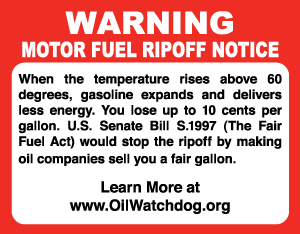
 So Costco’s decision to break ranks is dangerous because it reduces the likelihood that the industry can kill the national lawsuit, brought mainly by truckers who can lose hundreds of dollars each to hot fuel. (Fuel expands when it gets hot, and thus offers less energy per measured gallon. Temperature-adjusting pumps would deliver a tad more fuel for fuel above the so-called reference temperature of 60 degrees.) And the federal court order to produce documents, issued April 4,vastly raises the stakes.
Here’s some of what the documents and other communications, some dating back to the 1970s, could tell us:
- Canada allowed temperature adjustment of fuel in the 1980s. How did the industry industry lobby government and what did it tell retailers in Canada? Most Canadian stations now sell gas that way, and the shift was pitched to the public as simply being fair to everyone. However, in Canada (unlike the U.S.) fuel is usually less than 60 degrees and temperature adjustment at retail profits the industry. What were they saying among themselves, eh?
- The battle over hot fuel in the U.S. began way back in the 1970s, when state regulators first started talking about making sales adjusted for temperature. The oil lobby has been whacking down the idea ever since. What were the internal communications about regulatory proposals?
- In the 1980s, fuel retailers in state after state sued and won the right to buy their fuel from refineries with adjustment for temperature. These are the same folks who are now telling us that it really doesn’t matter that fuel sold to drivers is hot, because they really don’t make extra money on selling you a short gallon. And anyway they can’t afford to fix it. But what were refiners and retailers really saying about who benefits from temperature adjustment?
There’s lots more, if you want to wade through the court order itself. The judge was downright abrupt in dismissing the industry’s arguments that it couldn’t possibly afford to comb old files for relevant documents and e-mails. Part of the problem was that Exxon hadn’t made the same argument and was said to be pulling the documents. As with the Costco settlement, the oil companies had lost their united front.
Now, it comes down to this: With Costco agreeing to sell temperature-adjusted "fair fuel" as a condition for exiting the lawsuit, its documents won’t be needed. Costco gets to be the good guy, and deservedly.
The rest of the industry has to cough up the documents by mid-May. Then, while the lawyers who brought the suit spend months combing the documents and no doubt seeking more, Exxon, Chevron, BP, Shell, Valero, etc. have to decide whether they want their real tactics exposed in open court.
The downside of settlement is that it will no doubt be conditioned on sealing the thousands of documents demanded by the court. That, of course, is why drug companies and manufacturers settle defective product lawsuits. They pay one person who was harmed but get the documents detailing the defect sealed. It’s unfair in every way to the public good.
In the case of hot fuel, ending the case with a settlement would at least get the problem fixed, forcing the industry to sell gasoline to motorists in the same way that they already sell among themselves–adjusted for temperature.
It’s either that or go trial and let out the truth about why they’ve waged such a costly fight against fixing hot fuel for more than 40 years.