
7-01-2010 by dugan
BP’s devastating oil spill may now be the largest accidental spill in modern history, bigger than the estimated 140 million gallons spewed by the 1979-80 Ixtoc spill off the coast of Mexico, which eventually slimed 170 miles of Texas beaches. It’s smaller only than the deliberate spillage by Iraq into the Persian Gulf during the 1991 Gulf War, though estimates on the amount of that spill range widely. But be alert: BP apologists may soon make optimistic comparisons between this spill and the Ixtoc gusher.
 There are some unsubtle stories out there, saying that even a few years after Ixtoc, fisheries and beaches were largely recovered, and that today there is virtually no sign of the spill. But the Ixtoc spill and the BP spill are far from equal. Here are a few reasons:
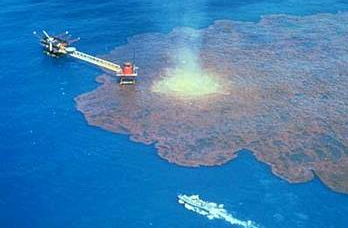
- The Ixtoc spill, shown at right, occurred in just 160 feet of water; the BP spill is at 5,000 feat.
- The oil at Ixtoc spilled into warm waters, a natural dispersant and evaporant. There were no deepwater oil plumes caught in frigid undersea currents.
- Much less of the spill affected ecologically sensitive marshes, wetlands and estuaries like those in Louisiana that are being slimed deep inland. Unlike with beach tarring, there is no effective way to clean the dense plant life of marshes or protect the spawning shellfish that inhabit them.
- There were no broad, rigorous real-time studies of the Ixtoc spill. Much of the information in news stories is anecdotal and casually observational.