
03-04-09 by dugan
Are fairness and transparency in buying and selling just "public perceptions" that are "subjective" and "variable"? Of course not. That’s why regulators measure and inspect the scales at your supermarket. They even limit the amount of water injected into a frozen turkey, since it’s not something shoppers can see for themselves. So Oilwatchdog is still trying to get those dismissive words and phrases out of a report by the California Energy Commission on the costs and benefits of selling gasoline fairly by accounting for the expansion of fuel at high temperatures. As we said in our most recent letter to the Commission before a showdown vote on March 11:
Fair and transparent method of sale is a bedrock of regulation and consumer protection. It is not, as parts of the report currently and bewilderingly assert, a mere “public perception,” or a “subjective… consumer benefit.”
We requested that every instance of words and phrases like that be changed, cited the formal economic and regulatory reasons to do so, etc. and at length.
 The diminishment of basic consumer rights is always in the corporate lobbying arsenal. I don’t think the Energy Commission staff members charged with deciding the costs and benefits of fixing the hot fuel problem recognized the power of dismissive words like "subjective" when they were, um, suggested(?) by the oil industry or a friend of the industry (see below under "conflict of interest"). Or that the report shouldn’t be recommending that the state pay for "focus groups and surveys" to judge the value of fairness and transparency in the marketplace.
We’ve also:
- Asked that that the politically appointed energy commissioner in charge of the study step down because he has a conflict of interest: His wife is a lobbyist for the main oil industry trade group in the West. That one seems like a duh, given that the members of the Western States Petroleum Association include major opponents of fixing the hot fuel issue, from major oil companies like Chevron and BP to gas station chains. But the commissioner, James Boyd, hasn’t even acknowledged receipt of the letter.
- Submitted a formal request for records of the commissioner’s communications with the energy commission staff about changes in the report.
- Protested that the commission’s final draft of the report, concluding that consumers would get no benefit, could only reach that conclusion by accepting the oil industry’s arguments as facts.
So, we’ll see what happens when the full California Energy Commission votes on the draft, late in the morning of March 11, Pacific Time. We’ll be there.
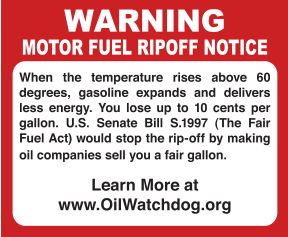
If you’ve gotten this far, here’s your bonus. E-mail [email protected] with your name and address, and we’ll snail-mail you one of our exclusive "ripoff" stickers like the one above. The Senate bill that’s mentioned on the sticker didn’t make it into law last year, but we’ll be trying again this year.