
04-07-09 by dugan
What OilWatchdog usually worries about is what refiners do to keep fuel prices higher than they should be, and lately I’ve been studying the paucity of real-time operational information that is available to the public (as opposed to the mountains of pricing and supply data available to those with unlimited bucks to spend on commercial reporting services). It’s secrecy protected by wealth.
Some of my interest was prompted by the revival of a lawsuit in California accusing major oil company refiners of using supply manipulation to keep gasoline prices above what a competitive market would produce. The suit dates back to events in 1996 involving Arco and Chevron, but the refining business has only grown more concentrated since then. The ability to exchange so-called "price signal" information between refiners has also vastly increased.
Sen. Maria Cantwell of Washington State was trying to get at the same issues in 2006, and expressed her frustration at how oligopolies (like the refining business, certainly in the West) mess with supply to affect prices. She asked for a "refinery-level audit" of costs and pricing–no doubt knowing that no such thing was or would likely ever be available.
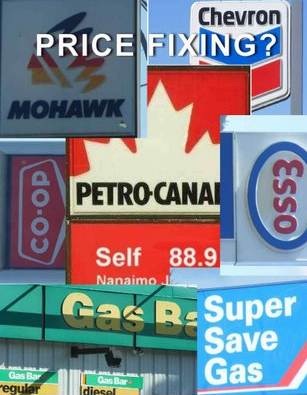
 But enough about the big, hard stuff. While hunting for info, I ran across two recent, entertaining price-fixing cases at the retail-chain level, possibly involving hundreds of gas stations. One is in Quebec, the other in Florida. Both involved fixing prices the old-fashioned way–calling the competitor chains and agreeing on a price that makes everyone (except consumers) happy. The Quebec case involves Esso (an arm of ExxonMobil) and Shell as well as smaller chains.
Cases like these–solved with gumshoe policing, including wiretaps (in Quebec) show how inadequate the law is in detecting, or even proving as a crime, the use of mutually available electronic data to create mutually agreeable prices in highly concentrated and uncompetitive industries.
My idea? Don’t let the major oil companies companies hide behind subscription barriers or "trade secrets" defenses. They’re not competitive and they don’t really have secrets from one another. It’s the un-rich public, and nonprofit groups like mine, that get frozen out of data that might make the industry look bad–and force it to change.